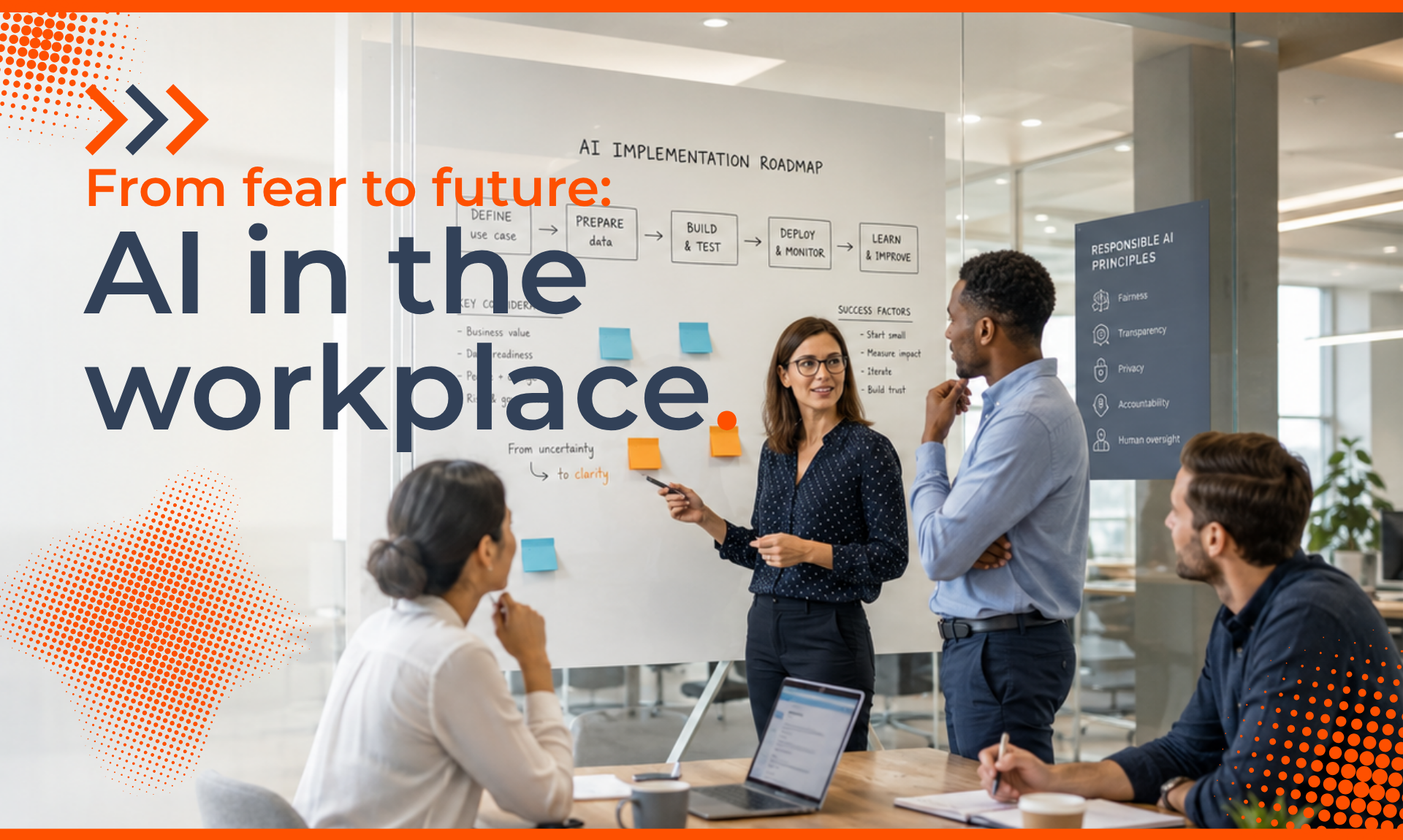
From fear to future: AI in the workplace.
Why AI in the workplace is a leadership challenge, not just a technology one.
AI is no longer something businesses can afford to keep at arm’s length. Whether it’s being used formally, quietly, cautiously or enthusiastically, AI is rapidly changing how organisations work, think, communicate, make decisions and support their teams.
But for many business owners, senior leaders and HR professionals, the challenge isn’t simply understanding what AI can do. It’s knowing where to start.
That was exactly the focus of From Fear to Future: AI in the Workplace, a seminar held in Bury St Edmunds on 28th April, hosted by Turning Factor and delivered by guest speaker Jules Rickman-Jenkins, founder of Flair Content.
We were eager to get involved as headline sponsors for the event and to invite some of our customers along.
Not because we’re suddenly claiming to be AI experts. We’re not.
But because we work closely with lots of businesses. We understand the pressures they’re facing, and we absolutely believe being a true business partner means helping customers make sense of big commercial challenges. And we think we’re on pretty safe ground here when we say AI is certainly one of the biggest!
The real AI challenge isn’t just the technology.
A lot of the conversation around AI tends to focus on the tools themselves.
- Which platform should you use?
- What can it automate?
- How fast can it make things?
- What can it help you produce?
Fair enough, they’re all valid questions.
But as the seminar made clear, the bigger challenge isn’t the tech. It’s everything around it – the people, leadership, governance and culture. Because AI adoption doesn’t sit neatly in one department, does it?
It impacts how people work, how decisions are made, how information’s handled, how risks are managed and how teams get confident using new tools.
For many organisations, that creates challenges. They know AI matters. They know people are already using it. They know competitors might be ahead. But they’re not always sure how to move forward without risk, confusion or unintended consequences.
The risks are real, but avoidable.
One of the strongest themes from the session was that many of the biggest AI risks are self-inflicted. Not because organisations are careless, but because the pace of change has left many of them without the right foundations in place.
Common issues already rearing their head include:
- no clear AI strategy
- teams using AI tools without guidance
- sensitive data being entered into public platforms
- AI-generated answers accepted as fact
- siloed knowledge across departments
- lack of training and confidence
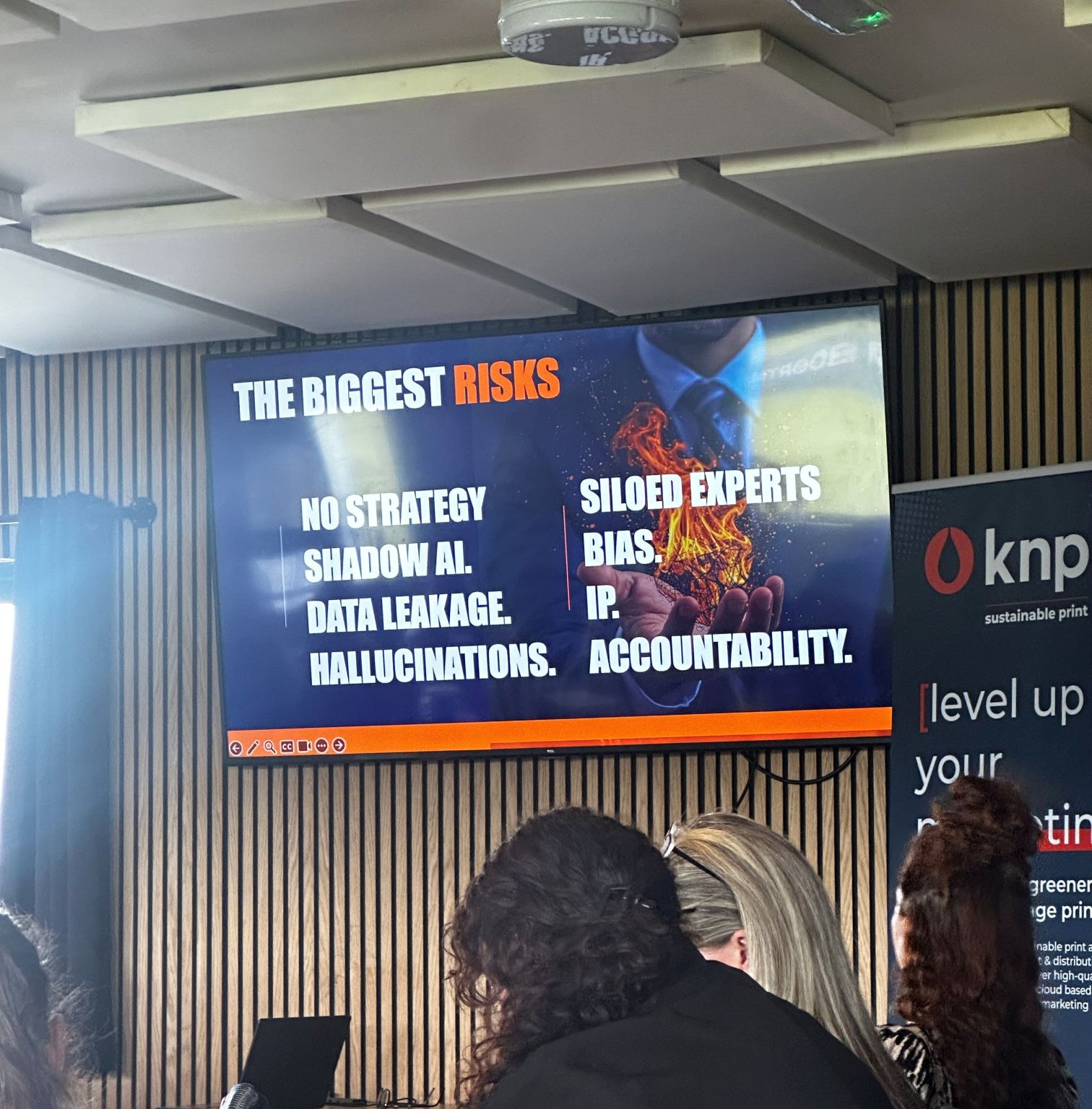
In other words, it’s not just a question of whether AI is good or bad. It’s a question of whether it’s being used clearly, safely and responsibly.
That’s where leadership becomes so important. Businesses need to understand not just what AI can do, but how it should be used, who’s responsible for it, what guardrails are needed and how their teams can be supported to use it effectively.
Are you leading it, or reacting to it?
That was the question right at the centre of the seminar. Because AI isn’t exactly hanging around. And while not every organisation needs to jump on every new tool, doing nothing is unlikely to be a safe long-term option either.
The businesses that benefit most from AI won’t necessarily be the ones that adopt the most technology the fastest. They’ll be the ones that approach it with clarity. The ones that understand where AI can support their people, improve decision-making, reduce repetitive work, strengthen processes and create value without losing control.
AI adoption isn’t just an operational issue. It’s a workforce issue. It affects skills, behaviours, responsibilities, communication, training and trust. Helping organisations adopt AI in a way that‘s practical, responsible and people-focused really matters.
Why KNP got involved.
For us, supporting this seminar was about more than just putting the KNP name to an event.
We’ve always been committed to doing everything we can to build long-term relationships with our customers. OK, print is at the centre of what we do, no argument there, but how we support clients is often wider than that. We help them communicate, organise, manage complexity, improve processes and deliver work that supports their wider commercial goals.
AI sits firmly in that wider business conversation.
The value of this seminar was in businesses asking the right questions:
- What should our AI policy look like?
- Where are our teams already using it?
- What risks do we need to manage?
- Who owns AI adoption internally?
- How do we train people properly?
- Where could AI genuinely help, rather than simply add noise?
And if we can help bring customers, local businesses and expert voices together to make those conversations easier, clearer and more useful, well, that feels like a pretty good reason to get involved.
More sessions planned.
At the end of the day, if the seminar confirmed anything to us, it’s that AI isn’t just an opportunity to be more efficient. It’s a responsibility to lead smarter.
It certainly got people talking, and we want more customers and local businesses to benefit from the same conversation.
There are plans to run a future edition of the seminar in Ipswich, and while the details are still being finalised, if you’re a business owner, senior leader or HR professional still trying to make sense of AI in the workplace, and you’re interested, don’t be shy, let us know.